
A BIN (Bank Identification Number) service manages BIN data and provides external lookup capabilities used to identify and determine a card's issuing bank, card network, and card tier.
If you look at the bank cards or U Cards around you, every card number is unique and consists of three types of fields: the issuer identification number, issuer-defined digits, and a check digit.
The structure is as follows.
Digits 1~6 are xxxxxx. These make up the BIN of the bank debit card. Bank cards beginning with 62 are UnionPay cards, meaning that this BIN was allocated by UnionPay, as the card network, to China Merchants Bank.
Digits 7~15 are defined by the issuer. Here, XXXXXXXX represents the identifier assigned by China Merchants Bank to a particular customer so that different cards and different users can be distinguished.
The final digit, digit 16, is the check digit. It is used to verify that the card number is valid, for example by applying the Luhn algorithm.
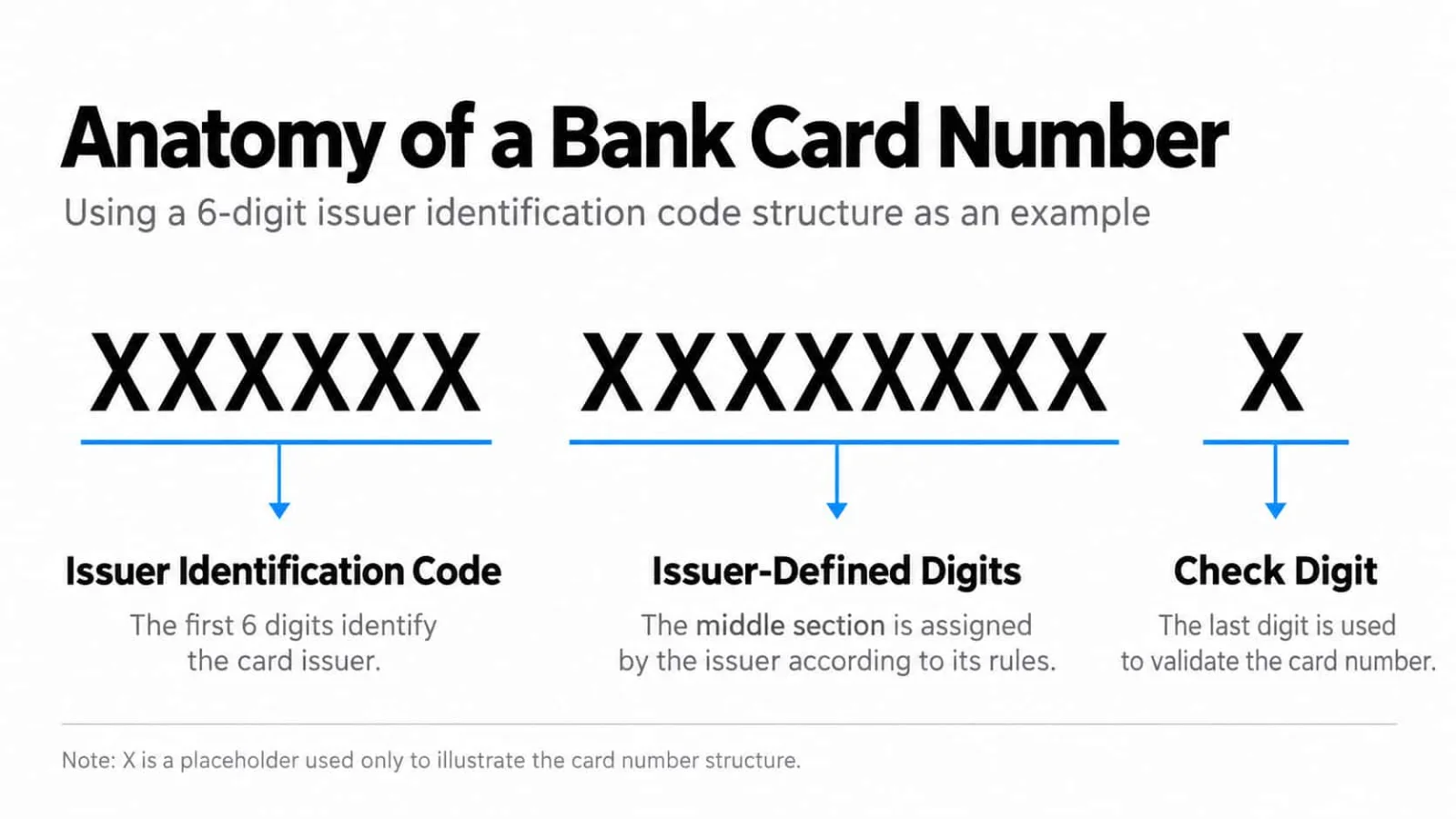
In the card-number structure shown above, the BIN is the foundation and one of the most important components because it identifies the bank associated with the card.
A BIN can reveal not only which bank issued a card, but also its card type and product category. This is why, when you enter a bank card number for a payment or link a card on some websites, the site can often identify the specific card after only the first few digits have been entered.
A BIN traditionally consists of six digits. At the end of 2014, the International Organization for Standardization (ISO) expanded the BIN format from six digits to eight digits. Most bank cards currently issued in China still use six-digit BINs.
The first digit of a BIN is the Major Industry Identifier (MII), which indicates the industry to which the issuing institution belongs. Different MII values correspond to different industries, as shown below:
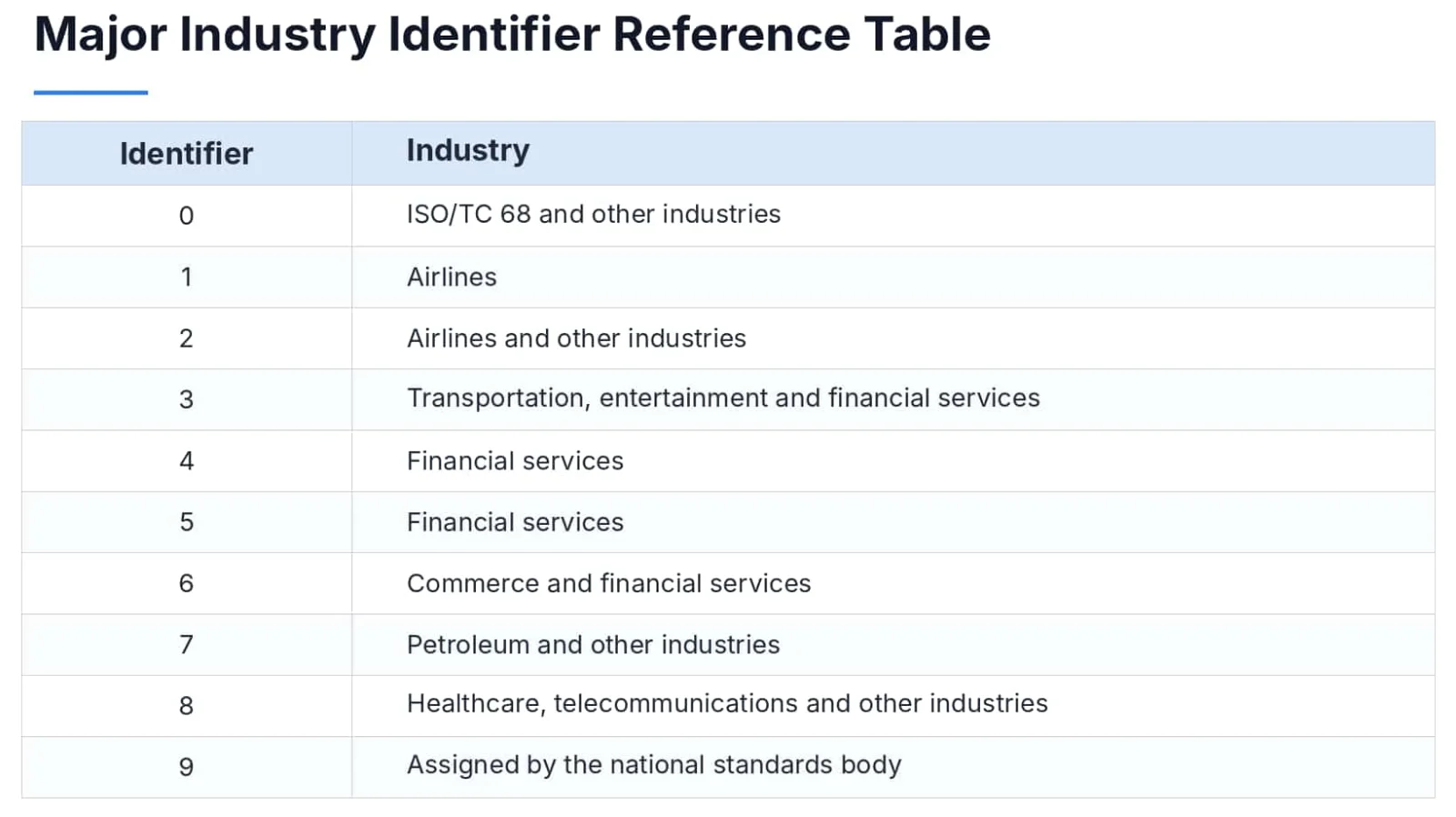
Before China UnionPay was established, bank cards issued by Chinese banks could generally only be used domestically because they either did not comply with international standards or, as illustrated above, were allocated under China's own national standards system. Most of these card numbers began with 9.
Cards beginning with 9 are now rarely seen, but they had important historical significance. To advance China's "Golden Card Project" and standardize bank-card operations nationwide, the People's Bank of China issued Document No. 342 in 2000: the Notice of the People's Bank of China on Issuing the Two Industry Standards, "Issuer Identification Codes and Card Numbers for Bank Cards" and "Format and Usage Specifications for Magnetic-Stripe Information on Bank Cards." The document specified that the first digit of the issuer identification code must be 9.
After Document No. 342 was issued in 2000, the establishment of common standards accelerated interoperability among bank-card systems in China. By the end of 2001, 383 million bank cards had been issued nationwide, more than 150,000 merchants accepted cards, 218,000 POS terminals and 38,000 ATMs were in operation, and annual transaction value had reached RMB 8.43 trillion. Bank-card spending had risen to 2.7% of total retail sales of consumer goods. These figures showed that bank cards were gaining wider acceptance and becoming more broadly used. Document No. 342 was therefore highly significant in its historical context.
BINs are allocated by the International Organization for Standardization (ISO) to bank-card organizations responsible for interbank switching and transaction exchange. Those card networks then allocate BINs to banks within their respective systems, as shown below:
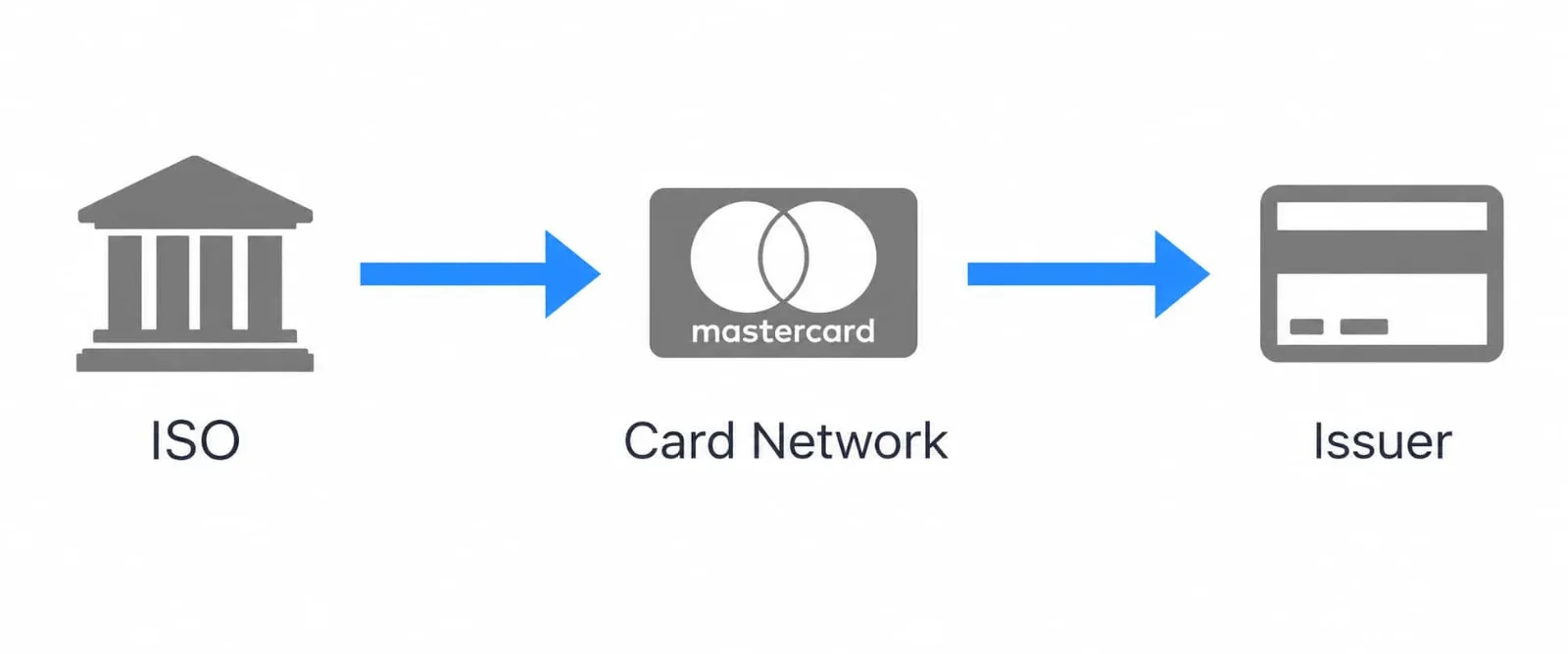
Before 2002, China did not have its own card network. Bank cards were largely limited to domestic use, while cards intended for international payments generally relied on networks such as Visa, Mastercard, JCB, and American Express.
In March 2002, with the approval of the State Council, the People's Bank of China authorized the establishment of China UnionPay, commonly referred to as UnionPay. UnionPay performs a number of functions, one of which is to standardize technical standards and operating rules for interbank card transactions, enabling interoperability and resource sharing among systems and supporting interbank, cross-regional, and cross-border card usage.
These objectives led UnionPay to introduce its standard card using a "62" BIN in August 2003. Over time, bank cards issued domestically in China increasingly adopted this unified standard, with card numbers beginning with 62. UnionPay also became a BIN registration authority, and banks in China were required to apply to UnionPay for BIN allocation when issuing cards.
The 62 BIN used by UnionPay standard cards represented not only the standardization of China's bank-card system, but also an important step from domestic usability toward international acceptance. UnionPay applied under ISO standards, ISO allocated BINs beginning with 62 to UnionPay, and UnionPay then redistributed those BINs to individual issuing banks. At that stage, six major international card organizations were commonly recognized: China UnionPay (UnionPay), Mastercard, Visa, American Express (AE), Japan Credit Bureau (JCB), and Diners Club. Their BIN ranges, based on ISO allocation, are shown below:
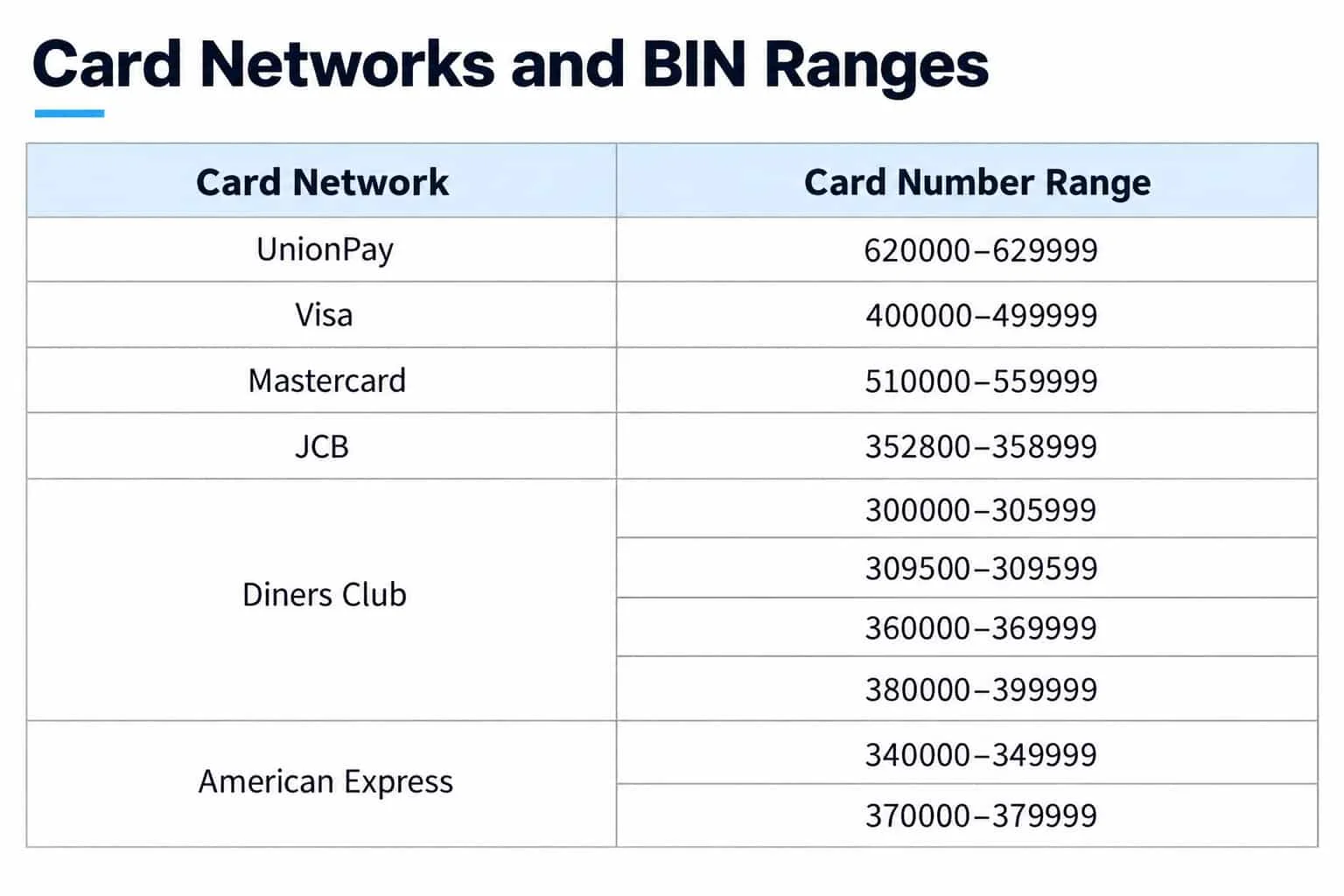
Under the standard process for issuing a bank card, an issuer applies to the relevant card network for a BIN, while the network's BIN resources are allocated by ISO. After receiving the appropriate BIN, the issuer generates the card number and issues the card to the cardholder.
However, many organizations offering U Cards now obtain a corporate-card BIN and then package tens of thousands of individual users—whether crypto traders or people involved in gray-market activities—as "employees" of a shell company in the platform's backend. This is why many U Cards claim to offer "no KYC" or extremely fast approval. Within Visa or Mastercard systems, the activity is presented as internal corporate spending, thereby bypassing anti-money-laundering controls that would otherwise apply to individual users.