
Topic guide
Crypto card risk knowledge
Understand account freezes, platform operations, BIN ranges, issuing banks, pooled funds, and issuing-chain risk.
8 published articles
- Account freezes
- BIN risk
- Issuing-chain risk
- Platform failure
Latest publication
U-Card Compliance: The Risks of Cards Built for ChatGPT and Claude Subscriptions
U-card providers openly promote their cards for ChatGPT and Claude subscriptions, even though OpenAI and Anthropic do not provide services in China or Russia. This article examines how U-cards can circumvent access restrictions, the associated risks under Chinese law and EU sanctions, and the compliance issues facing card issuers.
More articles
Are U Cards Safe? Which Parts of the Stack Carry the Main Risks
U cards are not automatically safe. The main risks come from the platform operator, asset custody, stablecoins, the card issuer, card networks, and merchant risk controls. Users should pay attention to fund segregation, issuer qualifications, KYC rules, and dispute-handling capacity, and should avoid keeping large balances on the card for long periods.
Are There Risks in Using U Cards?
U cards (crypto payment cards) involve complex risks across multiple layers, including platforms, custody, stablecoins, and issuers. This article provides a detailed analysis of common risks and response strategies to help users use them more safely.
Are U Cards Legal?
Whether a U card is legal depends on the platform’s regulatory status, the card issuer, the user’s jurisdiction, and the purpose of the funds. This article examines the business chain, platform and user responsibilities, and regulatory frameworks to help readers understand compliance boundaries.
What Legal and Compliance Risks Are Involved in Using U Cards in Mainland China?
Using a U Card in mainland China is not automatically illegal, but it involves risks related to virtual-currency bans, disguised foreign-exchange conversion, anti-money-laundering review, third-party payment facilitation, and false KYC. The level of risk depends on whether the funding chain is lawful and genuine. It is advisable to use your real identity, lawful funds, genuine consumption, and retain supporting records.
Are U Card Funds Protected by Deposit Insurance?
Most U Card balances are not protected by deposit insurance. Virtual assets, e-money, and prepaid balances are usually not covered. Only fiat funds that truly qualify as eligible bank deposits may be protected. Pay close attention to the contracting entity, account ownership, and payout conditions.
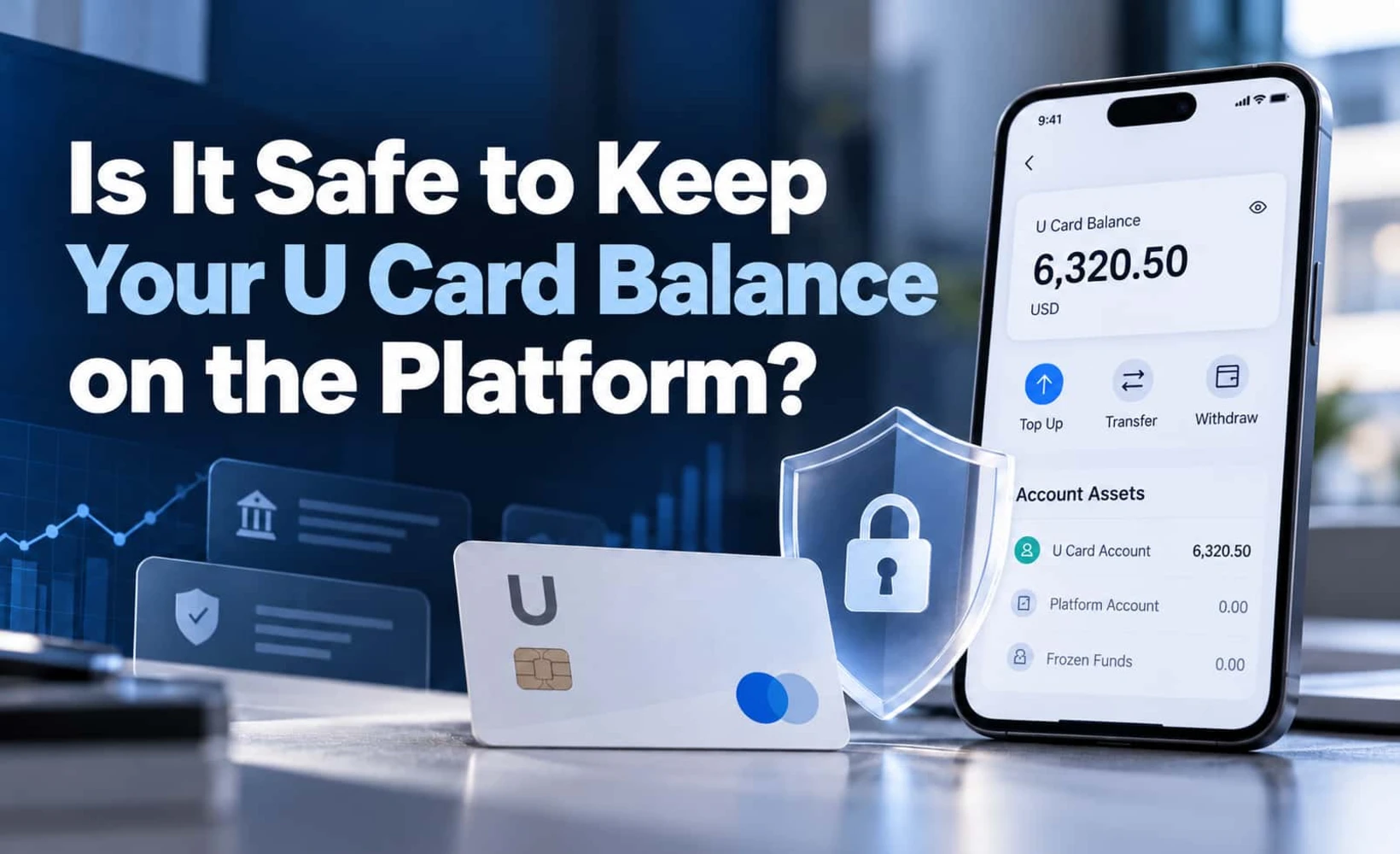
Is It Safe to Keep Your U Card Balance on the Platform?
The safety of a U Card balance depends on how the funds are held. Custodial platforms carry higher risk, while self-custody models are relatively safer but still exposed to smart-contract risk. A practical approach is to keep only near-term spending funds on the platform, withdraw regularly, and pay attention to platform transparency, safeguarding arrangements, and withdrawal reliability.
How to Tell Whether a U Card Platform Is Reliable
To judge whether a U card platform is reliable, you need to verify the operating entity, licenses, card issuer, fund custody, and exit mechanisms. This article provides detailed review steps, risk signals, and a scoring method to help users avoid financial losses.