
UCard Radar research library
Research & intelligence
Risk analysis, card comparisons, regional topics, industry reports, and data-transparency coverage.
Recommended
View all ›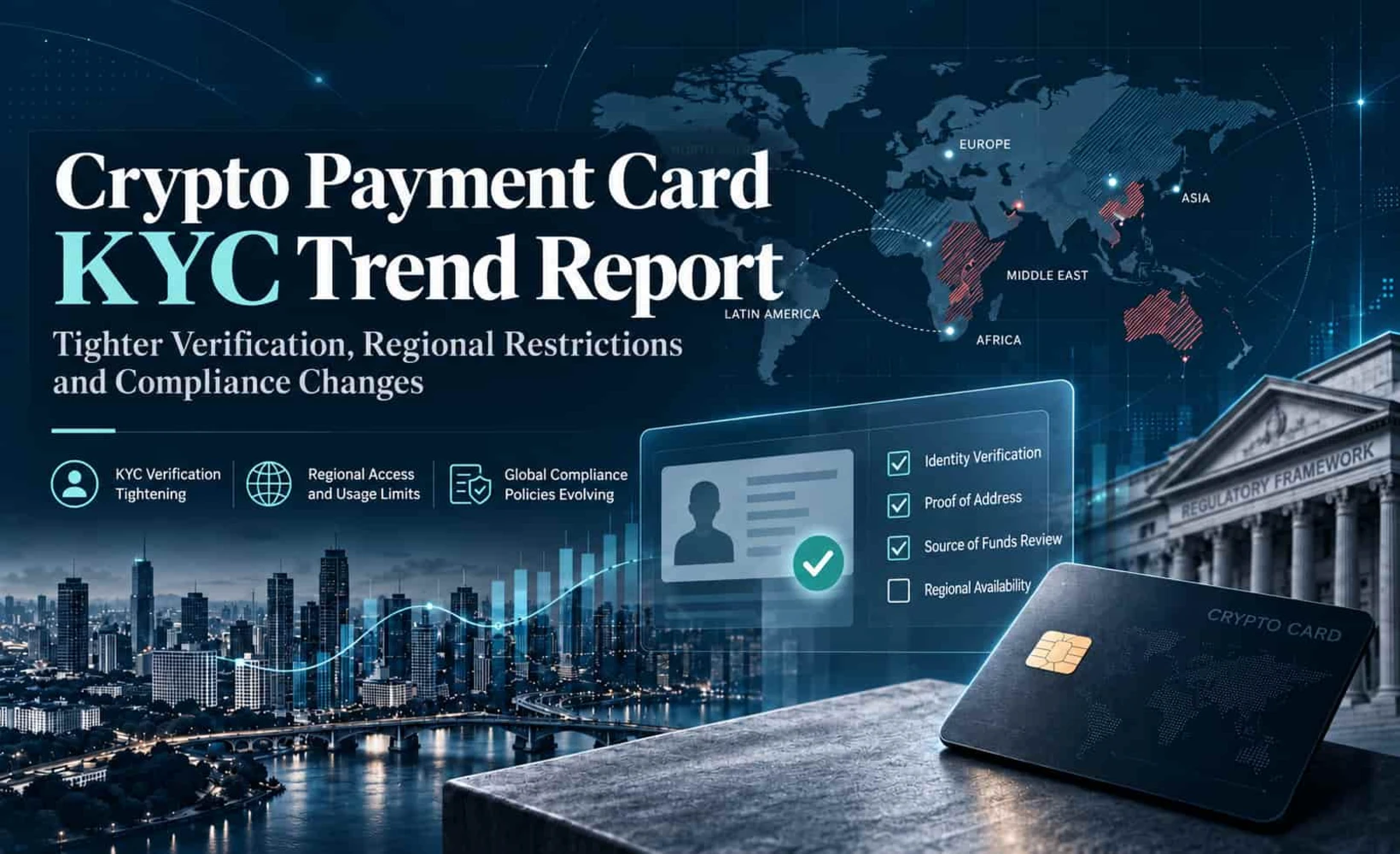
Crypto Payment Card KYC Trends Report: Tighter Verification, Regional Restrictions and Compliance Changes
By 2026, KYC for crypto payment cards has evolved from a one-time identity check into a risk-control framework spanning the entire account lifecycle. Reviews now cover source-of-funds tracing, ongoing monitoring, the Travel Rule, regional restrictions and other dimensions, meaning users increasingly need complete documentation explaining where their funds come from.
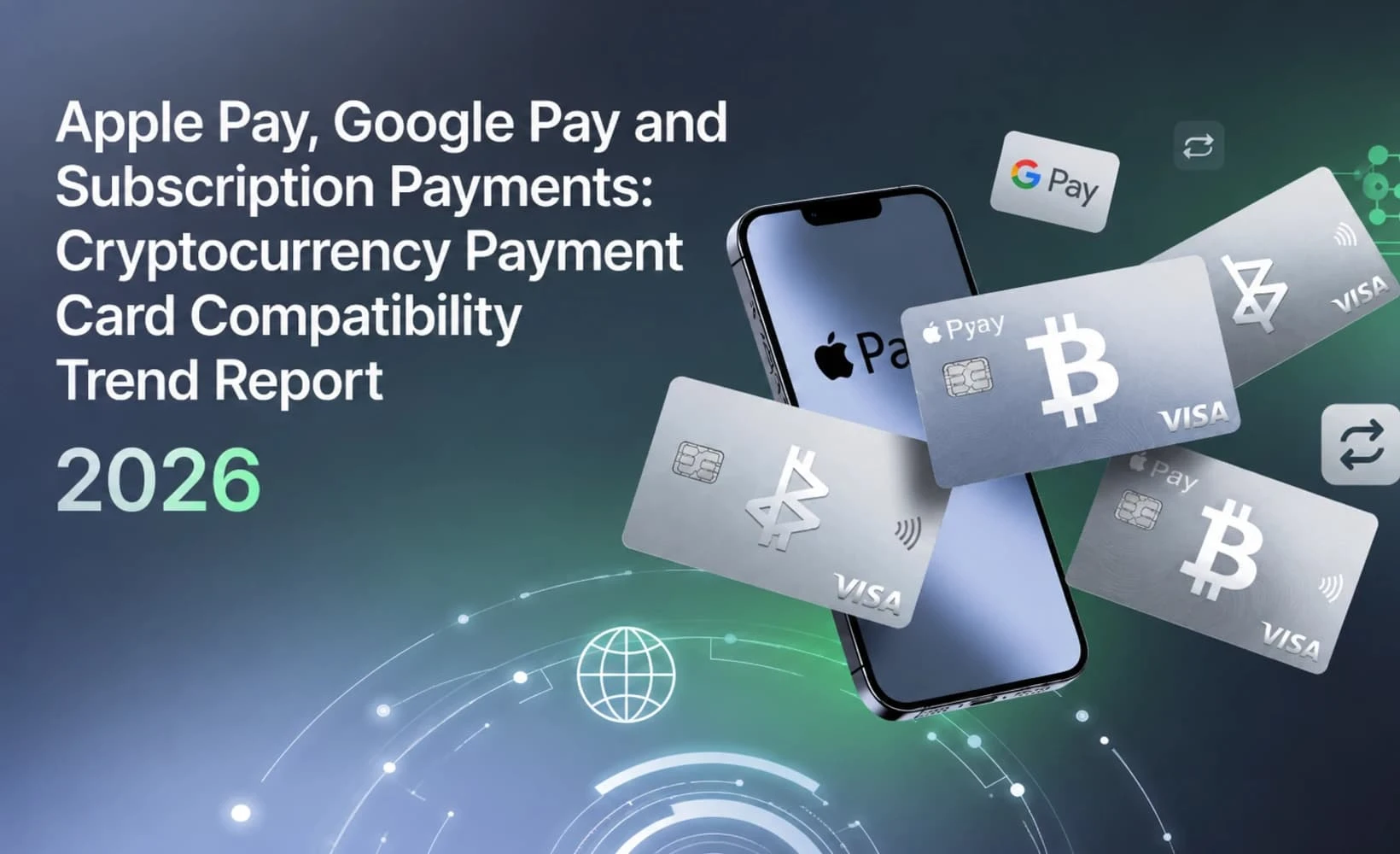
Apple Pay, Google Pay and Subscription Payments: Crypto Card Compatibility Trends Report
This report analyzes Apple Pay and Google Pay compatibility across 15+ crypto cards. Mobile-wallet support has become a baseline feature, while subscription-payment reliability is now the more important differentiator. Roughly 65% of the sample supports Apple Pay and more than 70% supports Google Pay, although regional differences remain significant. Users in China face application restrictions and should pay close attention to issuing BINs and 3DS support.

Rain: A Deep Dive into the Infrastructure Company Behind Stablecoin Card Issuing
Rain is an enterprise-grade stablecoin payments infrastructure provider that helps wallets, exchanges, and other platforms launch branded card programs. It handles card issuance, transaction authorization, stablecoin debiting, and settlement over traditional card networks. This article examines Rain’s business model, services, funding history, partner programs, and card-issuing costs.
Latest updates
Crypto Payment Card KYC Trends Report: Tighter Verification, Regional Restrictions and Compliance Changes
By 2026, KYC for crypto payment cards has evolved from a one-time identity check into a risk-control framework spanning the entire account lifecycle. Reviews now cover source-of-funds tracing, ongoing monitoring, the Travel Rule, regional restrictions and other dimensions, meaning users increasingly need complete documentation explaining where their funds come from.
Apple Pay, Google Pay and Subscription Payments: Crypto Card Compatibility Trends Report
This report analyzes Apple Pay and Google Pay compatibility across 15+ crypto cards. Mobile-wallet support has become a baseline feature, while subscription-payment reliability is now the more important differentiator. Roughly 65% of the sample supports Apple Pay and more than 70% supports Google Pay, although regional differences remain significant. Users in China face application restrictions and should pay close attention to issuing BINs and 3DS support.
Rain: A Deep Dive into the Infrastructure Company Behind Stablecoin Card Issuing
Rain is an enterprise-grade stablecoin payments infrastructure provider that helps wallets, exchanges, and other platforms launch branded card programs. It handles card issuance, transaction authorization, stablecoin debiting, and settlement over traditional card networks. This article examines Rain’s business model, services, funding history, partner programs, and card-issuing costs.

Visa vs. Mastercard in the Crypto Payment Card Market: Coverage and Key Differences
Visa and Mastercard are taking different approaches to the crypto payment card market. Visa is focused on scaling stablecoin card issuance and settlement, with more than 130 disclosed programs across over 50 countries. Mastercard has built a broader footprint spanning on-ramps, off-ramps, transfers, identity and more. For users, however, the differences between the card networks usually matter less than the issuer, fees, custody model and other product-level factors.
2026 Crypto Payment Card Industry Report: Product Count, Issuance Models and Market Shifts
The 2026 crypto payment card industry report shows that more than 200 publicly identifiable products are now available worldwide, while Visa supports more than 130 stablecoin-linked card programs. The number of consumer-facing brands is rising even as the underlying service providers become more concentrated. Stablecoins have overtaken Bitcoin as the primary payment asset, virtual cards have become the default product, and growth is shifting toward Latin America, Asia-Pacific and Africa.
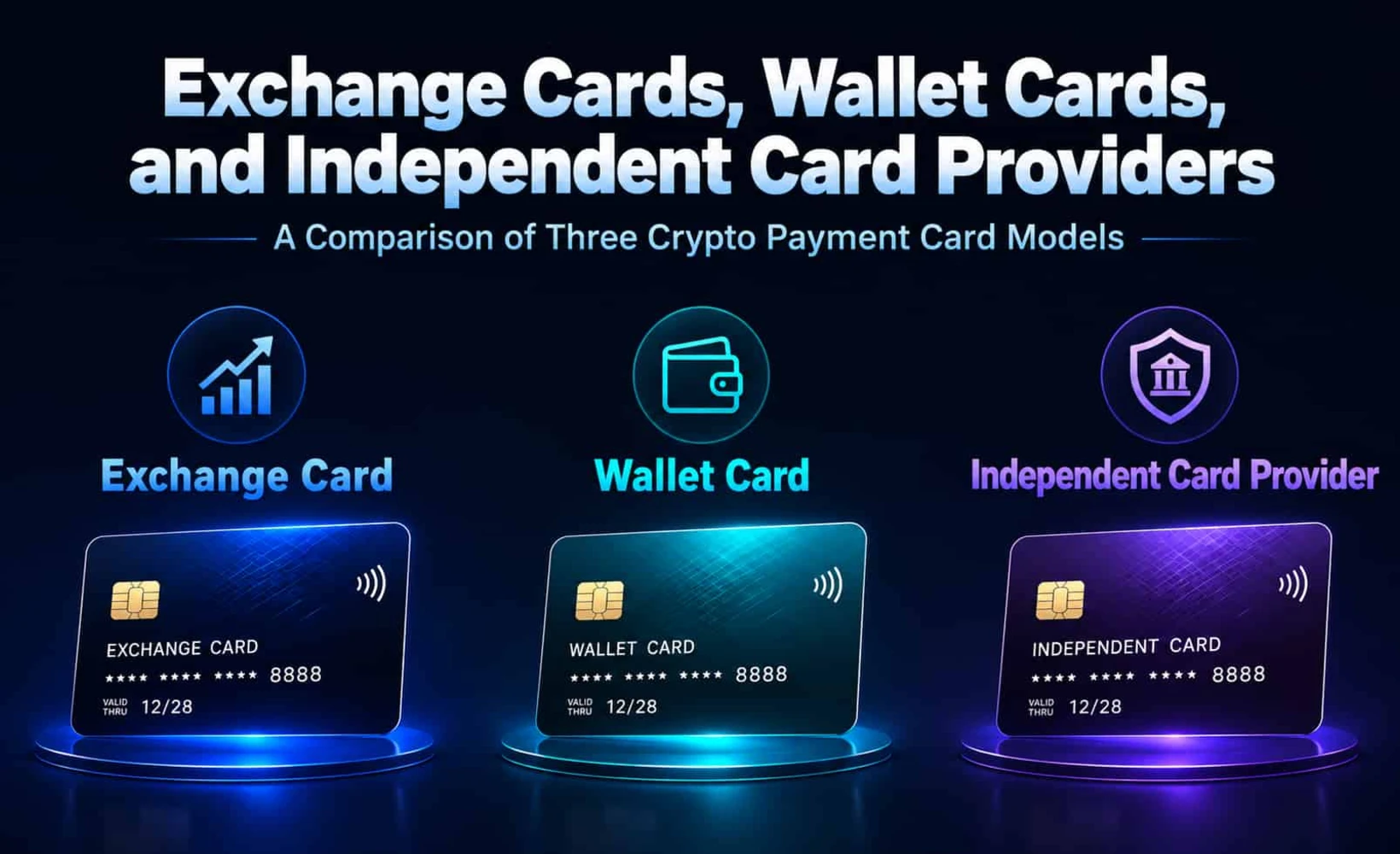
Exchange Cards, Wallet Cards and Independent Card Providers: Comparing Three Crypto Payment Card Models
This article compares three major crypto payment card models—exchange cards, wallet cards and independent card providers—covering custody, KYC requirements, payment scenarios, flexibility, rewards and risk. The goal is to help users choose the model that best fits their own needs.